KECK INSTITUTE FOR SPACE STUDIES


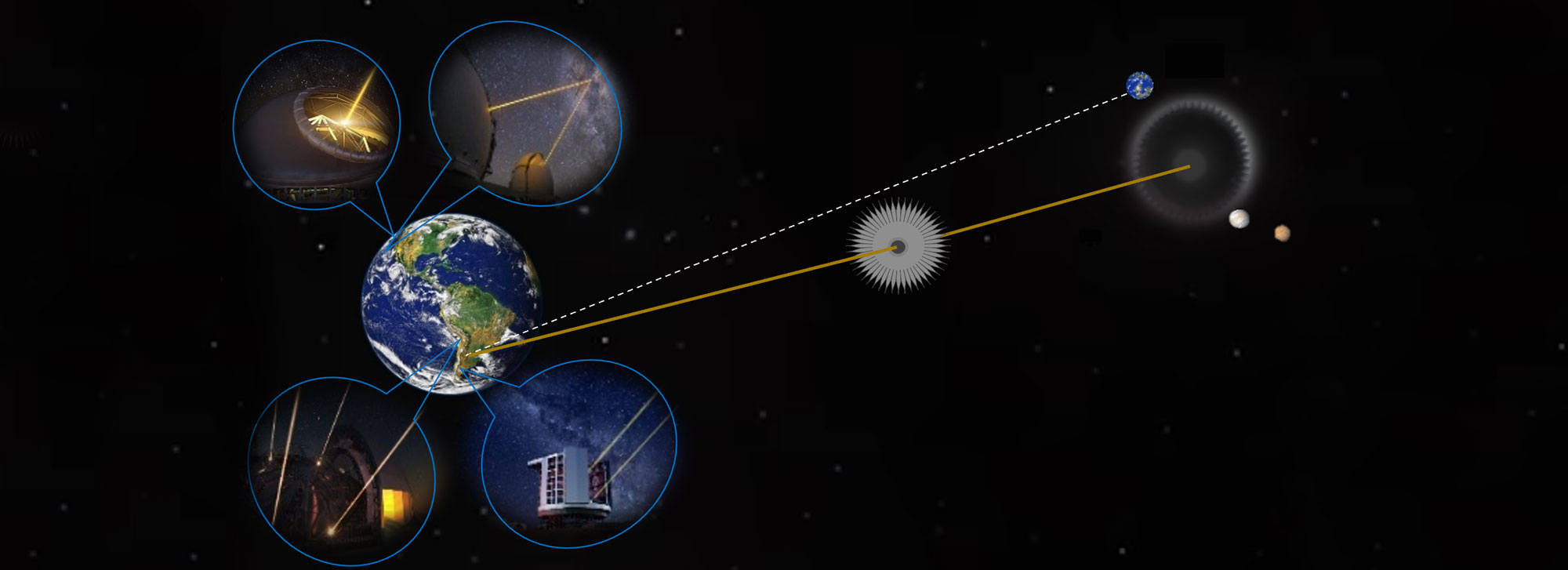
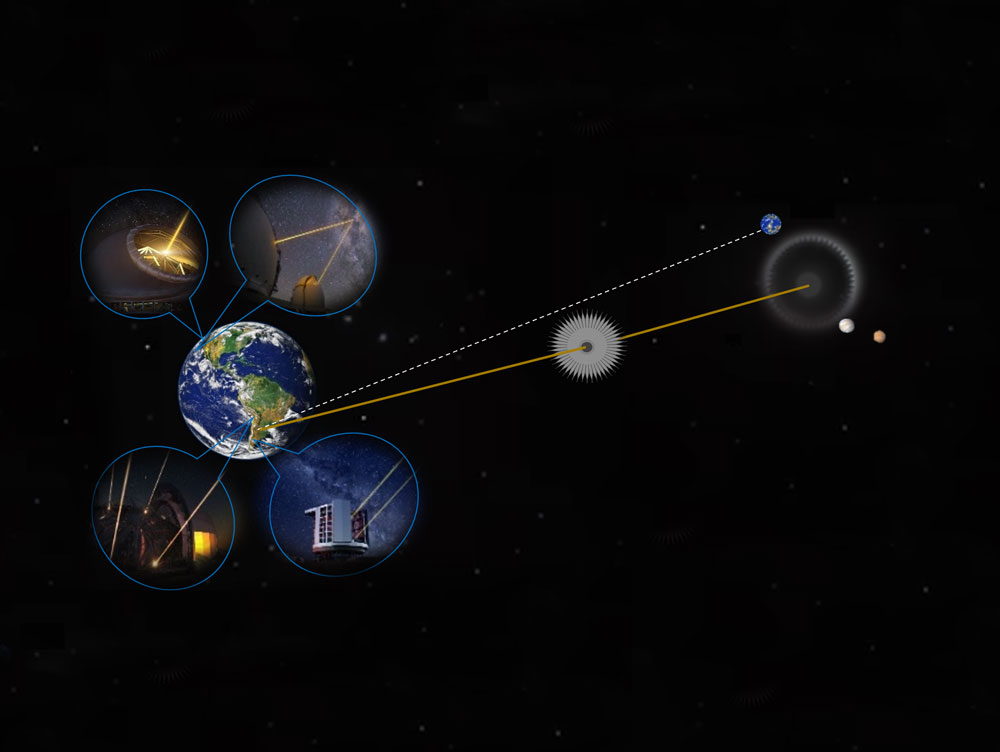
Workshop: Hybrid Space-Ground Observatories: Revolutionizing the Search for Earth-like Exoplanets

March 9 - 13, 2026
California Institute of Technology - Pasadena, CA 91125

Workshop Overview:

Our workshop study provides a unique opportunity to develop a strategic roadmap for advancing hybrid ground-space observatories and partnerships. By bringing together leading experts across technical, engineering, and scientific fields, we aim to create a comprehensive plan for detecting the first Earth-like exoplanet orbiting a sun-like star from this collaborative effort. Our KISS study team will bring together world-class experts, including Nobel Laureates, with multi-disciplinary background needed for the success of this study, covering exoplanet science, high-contrast imaging, space and ground instruments, starshades, mechanical engineering, precision deployment of large space structures and materials, orbital dynamics, formation control for alignment, mission yield, extreme adaptive optics, laser guide stars, atmospheric modeling and turbulence, as well as representatives from the largest ground-based telescopes and observatories. Together, we are committed to this study, eager to drive forward Interdisciplinary innovative approaches.

Our objectives address key technical and science issues and highlight the uniqueness of these concepts through imaging and spectral science products. It is important to relate the predicted performance to potential Habitable World Observatory (HWO) missions at UV/Vis/NIR bands. We will explore integrating and networking several ground-based telescopes to increase the number of potential targets and reduce fuel needs. The key topics are organized into five main categories:

  • Exoplanet science featuring the formation and characteristics of extrasolar planetary systems, physical and orbital characteristics, target prioritization, comparative planetology, exoplanet atmosphere, spectral retrieval, and habitability.
  • System engineering including starshade mechanical, optical, and formation flying tolerances; telescope optical, pointing, and detector requirements; fuel, orbital dynamics, spectral and angular resolution, and spectral background calibration.
  • Instrumentation questions highlighting advancements in extreme adaptive optics with laser guide stars, enhancements to large ground telescopes, new hybrid observatories, high-resolution post-processing, cross-correlation spectroscopy, integrating coronagraphs and starshades, atmospheric modelling, and dispersion corrections.
  • Precursor observations focusing on precursor mission opportunities, pathfinder missions, and requirements to identify potentially observable exo-Earths and habitable exoplanets (e.g. knowledge of mass and orbit).
  • Starshade technology covering developing, building and launching large deployable starshades; outlining the steps for deploying 35 m (HWO), 70 m (HWO), and 100 m (HOEE) starshades; on-orbit servicing; meeting all deployable and precision requirements; and, exploring inflatable-based projects alongside other deployment methods, and formation control.

The outcome of this study will significantly advance the objectives of the Astrophysics Decadal Survey and NASA’s planning for the Habitable World Observatory (HWO). We will produce a final report summarizing the key findings of this workshop for NASA HQ and other key stakeholders, and intend to publish results in a peer-reviewed journal. Our findings will establish a clear implementation plan, outlining actionable steps for representative space missions preparation and collaboration opportunities for uniquely unveiling new horizons for scientific breakthroughs in planetary science and astronomy.


Monday, March 9, 2026
Chen 100 Lecture Hall, Chen Neuroscience Research Building - Caltech

Short Course: Hybrid Space-Ground Observatories: Revolutionizing the Search for Earth-like Exoplanets

Time
Event
Speaker
8:15 - 8:45

Coffee and Refreshments

8:45 - 9:00

Logistics / Introduction

Harriet Brettle

9:00 - 9:30 Hybrid Space-Ground Observatories (.pdf)

John Mather

NASA Goddard Space Flight Center

9:30 - 10:00 Exploring New Worlds: Exoplanet Discoveries, Challenges, and Future Frontiers (.pdf)

Amber Young

NASA Headquarters (HQ)

10:00 - 10:30 Starshades (.pdf)

Stuart Shaklan

Jet Propulsion Laboratory

10:30 - 11:00 Break
11:00 - 11:30 Seeing Clearly - Observing Through Earth's Atmosphere (.pdf)

Ahmed Soliman

Jet Propulsion Laboratory

11:30 - 12:00 Extremely Large Telescopes - AO and Extreme AO (.pdf)

Markus Kasper

European Southern Observatory

12:00 - 12:30 Orbital Dynamics (.pdf)

Eliad Peretz

NASA Goddard Space Flight Center

12:30 - 1:30 Short Course Ends: Informal Lunch is provided Chen Breezeway

Invitation-Only Workshop Begins
Keck Center - Think Tank, Room 155

1:30 - 1:45 Walk to Keck Center, pick up badge and welcome packet, find seat in the Think Tank
1:45 - 2:30 Study Program Logistics and Introduction to KISS

Harriet Brettle

2:30 - 3:00 Participant Introductions Harriet Brettle
3:00 - 3:30 Study vision and goals for the study program John Mather
3:30 - 4:00 Break
4:00 - 4:30 Finalize study vision and goals via plenary discussion

All

4:30 - 5:00 Ongoing Work - NIAC Study Briefing x 3

NIAC Study Leads: Eliad Peretz/John Mather, Christine Gregg, Jonathan Sauder

5:00 - 5:30 Discussion and Solicitation of Lightning Talks

Team Leads

5:30 - 6:00 Pack up and walk to dinner

All

6:15 Dinner at the Athenaeum

Tuesday, March 10, 2026

Keck Center - Think Tank, Room 155

Time
Event
Speaker
8:00 - 8:30 Institute Opens - FREE THINK TIME
8:30 - 9:00 Coffee and Refreshments at Keck Center
9:00 - 9:15 Logistics and Team Lead Goals for the Day

Harriet Brettle and Team Leads

9:15 - 10:00 The Path to Earth-like Exoplnaets: Status and Challenges Heather Knutson, Caltech
10:00 - 10:30

Lightning Talks:

- Scaling JPL starshade and elssons learnt - Manan Arya

- Laser capabilities from starshades - Jalo Nousiainen

- Starshade vs. coronagraph - Rhonda Morgan


Mana Arya

Jalo Nousiainen

Rhonda Morgan

10:30 - 11:00 Break
11:00 - 11:15 Introduction to Breakout Groups and Topics Harriet Brettle
11:15 - 12:30

Breakout Session 1:

- Breakout Group 1A - Science goals (and in context to other missions)

- Breakout Group 1B - Building and launching a 100 m starshade: on-orbit build, inflatable, and Overall feasability

- Breakout Group 1C - Observation through Earth Atmosphere, AO atmopsheric turbulence, combining coronagraphs and starshades

Groups
12:30 - 2:00 Lunch on your own
2:00 - 2:45 Report outs from breakout groups (10 mins each) All
2:45 - 3:00 Plenary Discussion and Q&A All
3:00 - 3:30 Writing Time: Writing / information gathering / summarizing session All
3:30 - 4:00 Break
4:00 - 5:30

Breakout Session 2:

- Breakout Group 2A - Design Reference Mission

- Breakout Group 2B - Technology Maturation Roadmap

- Breakout Group 2C - Preparing capabilities at ground-based telescopes

Groups
5:30 - 7:30 POSTER SESSION and Informal dinner at the Keck Center
(dinner starts at 6:30 pm)

Wednesday, March 11, 2026

Keck Center - Think Tank, Room 155

Time
Event
Speaker
8:00 - 8:30 Institute Opens - FREE THINK TIME
8:30 - 9:00 Coffee and Refreshments at Keck Center
9:00 - 9:30 Logistics and Team Lead Goals for the Day, including Chapter Leads Review

Harriet Brettle and Team Leads

9:30 - 10:15 Report Outs from Breakout Groups (10 mins each) Groups
10:15 - 10:30 Plenary Session - implementing Hybrid Observatories: new instrumentation, coordinating and scheduling ground/space

Peter Plavchan

10:30 - 11:00 Break
11:00 - 11:30 Group Pulse: "Where we are at" & "What are we missing" All
11:30 - 12:30 Writing Time: Writing / information gathering / summarizing session All
12:30 - 2:00  Group Picture and Lunch at the Athenaeum
2:00 - 3:30

Breakout Session 3:

Breakout Group 3A - Precursor Science: finding and characterizing targets

Breakout Group 3B - Precursor Engineering: what preceeds HOEE Starshade and AO

Breakout Group 3C - Coordinating observations: scheduling, communications, multi-telescope coordination

Groups
3:30 - 3:45 Quick Break
3:45 - 4:15 Report outs from breakout groups (10 mins each) All
4:15 - 4:45

KISS Outputs - Final Report and Stakeholders

Harriet Brettle
4:45 - 5:00 Pack up and move to reception All
5:00 - 5:30

Lecture Reception (outside Ramo Auditorium)

All
5:30 - 6:30 Guest Lecture - Revolutionizing Astrophysics: How Space and Ground Telescopes Can Work Together (Ramo Auditorium) John Mather
6:30 Dinner on your own

Thursday, March 12, 2026

Keck Center - Think Tank, Room 155

Time
Event
Speaker
8:00 - 8:30

Institute Opens - FREE THINK TIME

8:30 - 9:00

Coffee and Refreshments at Keck Center

9:00 - 9:15 Logistics and Team Lead Goals for the Day

Harriet Brettle and Team Leads

9:15 - 10:45

Breakout Session 4:

4A: Increase Starshade to 129 m to get to 1.7 microns?

4B: Starshade s/c and launch vehicles

4C: Programmatic Avenus, Advocacy for HOEE incl. internation collaboration

Team Leads

10:45 - 11:15 Break
11:15 - 11:45 Report outs from breakout groups (10 mins each) All
11:45 - 12:30 Plenary Discussion: HOEE and HWO alignment John Mather
12:30 - 2:00

Lunch at the Keck Center

2:00 - 2:30

FREE THINK TIME (individual, or self organizing small groups)

All
2:30 - 3:00 Importance of Illustrations - KISS Gallery Harriet Brettle
3:00 - 3:30 Writing and Illustrations Sprint All
3:30 - 4:00

Break

4:00 - 5:30 Plenary Discussion: Key Takeaways and Recommendations Team Leads
5:30 - 6:00 Walk over to the Athenaeum All
6:00

Dinner at the Athenaeum


Friday, March 13, 2026

Keck Center - Think Tank, Room 155

Time
Event
Speaker
8:00 - 8:30

Institute Opens - FREE THINK TIME

8:30 - 9:00

Coffee and Refreshments at Keck Center

9:00 - 9:15 Logistics and Team Lead Goals for the Day

Harriet Brettle and Team Leads

9:15 - 10:00 Report Status Check Chapter Leads
10:00 - 10:30 Plenary Group Discussion: Path Forward for Collaboration, Discussion on Future Projects All
10:30 - 11:00 Break
11:00 - 12:30 Plenary Discussion: Tech Development Concepts and Science Goals Summary All
12:30 - 2:00

Lunch at the Keck Center

2:00 - 3:00

Small Group Working Session - Report Drafting

All
3:00 - 3:30 Break
3:30 - 4:30 Open Discussion of Final Report and Path Forward  
4:30 - 5:00 Workshop Closeout Harriet Brettle
5:00

Institute Closes


Workshop Participants:

  • Zahra Ahmed - Stanford University
  • Manan Arya - Stanford University
  • Harsh Bhundiya - University of Southern California
  • Aman Chandra - University of Arizona
  • Jessie Christiansen - Caltech
  • Mario Damiano - JPL
  • Richard Dekany - Caltech
  • Juliana Garcia-Mejia - Massachusetts Institute of Technology
  • Christine Gregg - NASA Ames Research Center
  • Markus E. Kasper - European Southern Observatory
  • Jennifer Lopez - Odyssey Space
  • John Mather - NASA Goddard Space Flight Center
  • David Miller - JPL
  • Rhonda Morgan - JPL
  • Jalo Nousiainen - European Southern Observatory
  • Sergio Pellegrino - Caltech
  • Eliad Peretz - NASA Goddard Space Flight Center
  • Peter Plavchan - George Mason University
  • William Sanchez - JPL
  • Aniket Sanghi - Caltech
  • Jonathan Sauder - Amazon
  • Stuart Shaklan - JPL
  • Ahmed Soliman - NASA JPL/Caltech
  • Andrew Szentgyorgyi - Harvard Smithsonian Center for Astrophysics
  • Jamila Taaki - University of Michigan
  • Ronald Turner - Analytic Services Inc (ANSER)
  • Amber Young - Mary W. Jackson NASA Headquarters
  • Aiden Zelakiewicz - Cornell University